Why Do I Snore?
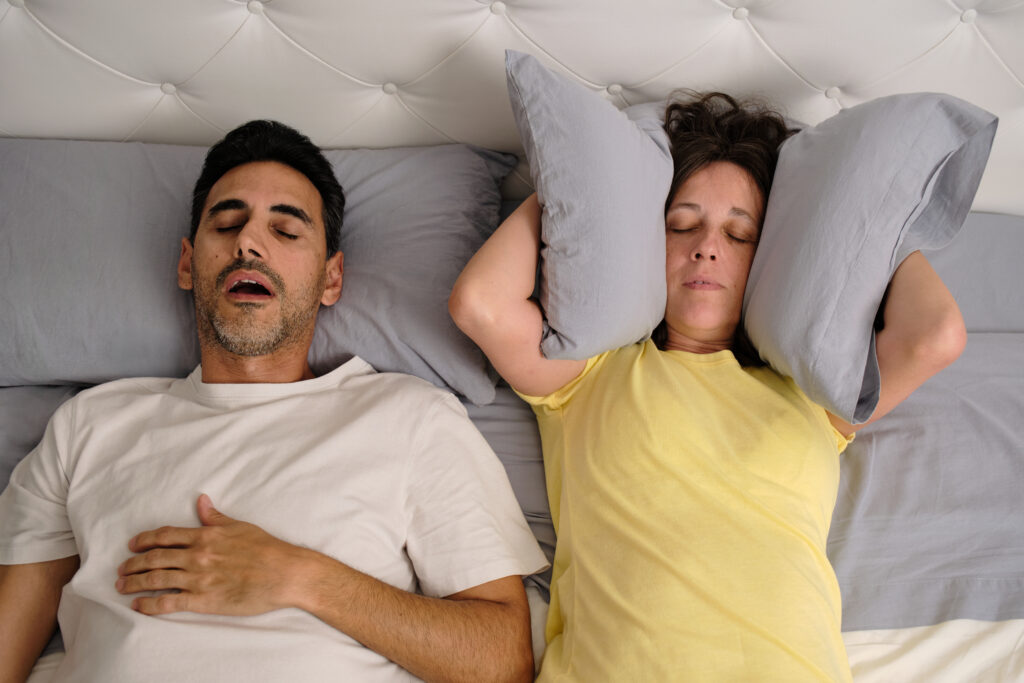
Maybe you’re the one asking “why am I snoring?” after a partner mentioned it again this morning. Or maybe you’re the partner, lying awake next to someone sawing logs, wondering if this is just an annoying habit or something worth taking seriously. Both audiences end up here for the same reason: snoring is common, but it is rarely random, and understanding what causes people to snore is the first step toward figuring out whether it is harmless or a sign of something bigger.
A note before we start: This article is for general education and is not a substitute for a professional sleep evaluation.
What Causes Snoring, Mechanically
Snoring happens when airflow through your nose and throat becomes partially blocked during sleep, causing the surrounding soft tissue to vibrate. According to Cleveland Clinic, this can happen for several distinct reasons: a longer or softer palate, an elongated uvula (the dangling tissue at the back of your throat), partially blocked nasal passages, or throat and tongue muscles that relax too much during sleep and collapse into the airway.[1] Structural issues like a deviated septum or nasal polyps can create the same effect by forcing you to work harder to move air through narrowed nasal passages.
In short: something is narrowing your airway just enough that the tissue around it flutters as air passes through – that fluttering is the sound you (or your partner) hear.
Why Do I Snore When I Sleep, But Not While Awake?
This confuses a lot of people, but it makes sense once you understand what is different about sleep. While you are awake, your throat and tongue muscles maintain enough tone to keep your airway open. During sleep – particularly deeper sleep stages – those same muscles relax significantly. For most people, that relaxation is harmless. But if you already have a narrower airway, extra soft tissue, or specific anatomical factors, that normal nighttime muscle relaxation is enough to create the partial blockage that produces snoring.
This is also why snoring tends to get worse with alcohol, sedatives, or muscle relaxants – anything that relaxes muscle tone further makes the airway more prone to collapse.
Why Do Men Snore More Than Women?
This is a real, well-documented pattern, not a stereotype. Research comparing male and female airway anatomy using imaging has found that men typically have a longer, softer oropharynx (the middle part of the throat) and more overall soft tissue in the throat than women.[2] Men’s airways are also more prone to the kind of structural collapse that produces snoring and, in more severe cases, obstructive sleep apnea.
Hormones matter too. Snoring and sleep apnea prevalence rises significantly in women after menopause, when protective hormonal effects diminish – narrowing the gap between male and female rates later in life.
Does Weight Gain Cause Snoring?
Yes, weight gain is one of the most well-established contributors to snoring, though it is not the only factor. Extra tissue around the neck and throat – sometimes referred to clinically as increased neck circumference – adds bulk that can narrow the airway and increase the likelihood of soft tissue collapse during sleep. This is part of why snoring often increases gradually alongside weight gain over the years, and why weight loss is frequently one of the first recommendations for reducing mild snoring.
That said, plenty of people with a healthy weight snore too, since anatomy, nasal structure, alcohol use, sleep position, and aging all play independent roles.
Other Common Contributing Factors
A few additional factors are worth knowing, since they explain why snoring can vary night to night for the same person:
SITUATIONAL TRIGGERS
- Sleep position.Back-sleeping lets gravity pull the tongue into the throat
- Nasal congestion.Allergies, colds, or sinus issues force harder breathing
- Alcohol and sedatives.These relax throat muscles beyond their normal tone
LONGER-TERM FACTORS
- Aging.Throat muscle tone naturally decreases over time
- Weight changes.Neck and throat tissue adds bulk over the years
- Anatomy.Palate, uvula, and jaw structure are largely fixed traits
When Snoring Is More Than Just Snoring
Snoring is frequently the very first sign of obstructive sleep apnea that anyone notices – often long before daytime symptoms become obvious enough to prompt a doctor’s visit. Not everyone who snores has sleep apnea, but the majority of people with sleep apnea do snore.
If snoring is paired with witnessed pauses in breathing, gasping, choking, or noticeable daytime fatigue, it is worth exploring further. Our guide on Is Snoring Sleep Apnea? breaks down exactly how to tell the difference between simple snoring and something requiring evaluation, and our broader warning signs of sleep apnea guide covers the fuller symptom picture beyond snoring alone.
For Partners Who Are the Ones Losing Sleep
If you are the partner searching this at 2 a.m., you are not overreacting. Snoring disrupts your sleep too, and mentioning what you have noticed – including any pauses in breathing or gasping – gives your partner valuable information they cannot observe themselves. You are often the first and most reliable source of information a provider has when evaluating whether snoring might be something more.
Frequently Asked Questions
New or worsening snoring is often tied to a gradual change – weight gain, aging-related loss of throat muscle tone, increased alcohol use, or new nasal congestion from allergies. It can also reflect sleep position changes or, in some cases, early airway narrowing worth having evaluated if it continues or worsens.
Snoring happens when airflow through the nose and throat becomes partially blocked during sleep, causing soft tissue to vibrate. Common causes include a longer or softer palate, an elongated uvula, blocked nasal passages, and throat or tongue muscles that relax and collapse into the airway during sleep.
Research comparing airway anatomy has found men typically have a longer, softer oropharynx and more overall soft tissue in the throat than women, making their airways more prone to the kind of collapse that produces snoring. Hormonal factors also play a role, since snoring prevalence in women rises after menopause.
Yes, weight gain is one of the most well-established contributors to snoring. Extra tissue around the neck and throat adds bulk that can narrow the airway and increase soft tissue collapse during sleep. That said, plenty of people at a healthy weight snore too, since anatomy and other factors play independent roles.
Snoring Become a Regular Pattern?
If snoring is showing up alongside gasping, pauses in breathing, or daytime fatigue, the most reliable next step is a proper evaluation – not more guessing. At TMJ & Sleep Therapy Centre Georgia, we help patients and their partners finally get a clear answer.
Call us at (912) 576-4011 · Kingsland, GA · Serving St. Marys, Folkston, Brunswick & Fernandina Beach
- Cleveland Clinic. Wondering Why You Snore? 5 Possible Causes. Cleveland Clinic Health Library. health.clevelandclinic.org/snoring-causes
- Obstructive Sleep Apnea in Women: Specific Issues and Interventions. PMC, National Library of Medicine. ncbi.nlm.nih.gov/pmc/articles/PMC5028797
After 20+ years in practice, Dr. Lassiter focuses exclusively on the root causes of jaw pain, sleep disorders, and chronic facial pain. His approach: thorough diagnosis, honest communication, and care that targets the source of the problem rather than just managing symptoms. TMJ & Sleep Therapy Centre Georgia serves patients throughout Southeast Georgia and Northeast Florida.